The Ultimate Guide to Bookkeeping Security: Everything You Need to Succeed

Jackie Dorner • March 27, 2026

When you first started your business, your focus was likely on growth, customer satisfaction, and building a brand you could be proud of. You probably didn't spend your nights worrying about data encryption protocols or multi-factor authentication. However, as your business scales, your financial data becomes one of your most valuable: and vulnerable: assets.

For many owners, the thought of moving to a virtual bookkeeper or deciding to outsource bookkeeping feels like a leap of faith. You might find yourself asking: Is my data really safe in the cloud? Who has access to my bank feeds? What happens if my information is intercepted?

At DornerLand Bookkeeping, we understand that security isn't just a technical requirement; it is the foundation of the trust we build with our clients. Whether you are operating in Buffalo, Amherst, or anywhere across the country, protecting your financial integrity is our top priority. This guide will walk you through everything you need to know about small business bookkeeping security so you can focus on what you do best.

The Reality of Small Business Security Risks

Many small business owners fall into the trap of thinking they are "too small" to be targeted by cybercriminals. Unfortunately, the opposite is often true. Smaller operations frequently have weaker security measures than large corporations, making them "low-hanging fruit" for hackers.

Common risks include:

  • Phishing Scams: Fraudulent emails designed to trick you into revealing login credentials.
  • Weak Passwords: Using the same password for your banking, email, and accounting software.
  • Unsecured Networks: Accessing sensitive financial data over public Wi-Fi.
  • Internal Errors: Employees having more access to data than they actually need to perform their jobs.

By addressing these issues head-on, you don't just protect your money; you save time and reduce the administrative burden of recovering from a potential breach.

1. Strong Authentication: Your First Line of Defense

Security starts with how you enter your systems. If your password is "Business2026," your data is essentially sitting behind an unlocked door.

Multi-Factor Authentication (MFA)

This is the single most effective tool in your security arsenal. MFA requires you to provide two or more verification factors to gain access to your accounts. This usually looks like a password followed by a code sent to your phone or generated by an app. Even if a hacker steals your password, they cannot access your accounts without that second physical device.

Password Management

You should never reuse passwords across different platforms. We recommend using a dedicated password manager. These tools generate complex, 12-to-15-character passwords and store them in an encrypted vault. This ensures that a breach at one service provider doesn't lead to a domino effect across all your business accounts.

Clean modern desk with laptop representing secure small business bookkeeping and financial data protection.

2. The Principle of Least Privilege

One of the biggest mistakes in small business bookkeeping is giving everyone "Admin" access. To keep your data secure, you should implement the "Principle of Least Privilege." This means every user: whether an employee or a contractor: only has access to the specific data they need to complete their tasks.

For example, an employee helping with payroll entry does not necessarily need access to your full financial reports or your strategic tax planning documents. By segmenting access, you limit the "blast radius" if an individual account is ever compromised.

At DornerLand Bookkeeping, we help clients set up appropriate user roles within their accounting software, ensuring that your sensitive data remains on a "need-to-know" basis.

3. Why Cloud Bookkeeping is Often Safer Than Local Storage

There is a common misconception that keeping files on a physical hard drive in your office is safer than using a cloud-based virtual bookkeeper. In reality, physical hardware is susceptible to theft, fire, and hardware failure.

Modern cloud platforms like QuickBooks and Xero invest billions of dollars into security. When you use these services, you benefit from:

  • Bank-Level Encryption: Your data is "scrambled" while it travels from your computer to the server (in transit) and while it sits on the server (at rest).
  • Automatic Backups: You never have to worry about losing data because a laptop crashed.
  • SOC 2 Compliance: This is a gold-standard certification that proves a service provider has rigorous controls in place to protect client data.

Business owner securely accessing cloud financial data before choosing to outsource bookkeeping services.

This is paragraph text. Click it or hit the Manage Text button to change the font, color, size, format, and more. To set up site-wide paragraph and title styles, go to Site Theme.


By Jackie Dorner March 30, 2026
If you have ever felt a sense of dread as January approaches, you are not alone. For many small business owners in Buffalo, Rochester, and across Western New York, the start of the year isn't just about fresh goals: it’s about the looming deadline for 1099 forms. Managing contractors and vendors is a vital part of growing your business, but the administrative burden that comes with it can be overwhelming. A single typo or a missed deadline can lead to frustrating IRS penalties and unwanted stress. However, 1099 season doesn't have to be a nightmare. Most of the "tax time panic" is actually a symptom of a larger issue: disorganized bookkeeping throughout the rest of the year. At DornerLand Bookkeeping, we see these common pitfalls every day. By identifying these mistakes early and implementing professional financial data entry habits, you can protect your business and focus on what you do best. Here are the seven most common mistakes you might be making with 1099s and how to fix them today. 1. Missing the Hard Deadline of January 31st One of the most frequent mistakes is simply waiting too long to start the process. The IRS is strict: Form 1099-NEC (Non-Employee Compensation) must be filed by January 31st. This isn't just the postmark date for the contractor; it is the deadline for the IRS as well. If you miss this window, the penalties add up quickly. For 2025 and 2026, filing even 30 days late can cost you $60 per form. If you wait until after August, that penalty can jump to $330 per form. For a business with ten contractors, a simple oversight could cost you thousands of dollars in avoidable fees. The Fix: Don’t treat January 31st as the start date. Instead, make it your "finish line." Set an internal deadline of January 15th to have all data reviewed and ready. Using professional bookkeeping services ensures your records are reconciled monthly, so when January arrives, you aren't digging through a year's worth of receipts. 2. Using the Wrong 1099 Form Type A common point of confusion is the distinction between Form 1099-NEC and Form 1099-MISC. A few years ago, the IRS brought back the 1099-NEC specifically for non-employee compensation, but many business owners still try to report everything on the 1099-MISC. 1099-NEC: Use this for payments of $600 or more to independent contractors, consultants, and freelancers. 1099-MISC: Use this for rent, royalties, prizes, or healthcare payments. Reporting a consultant’s fee on a 1099-MISC is a red flag for the IRS and can trigger a rejection of your filing. The Fix: Review your vendor list in your accounting software. Ensure that your vendors are categorized correctly based on the service they provide. If you are unsure which form applies to your specific situation, checking our FAQs can provide more clarity on reporting requirements.
By Jackie Dorner March 13, 2026
You know that feeling when you check your bank balance on a Tuesday morning, and it’s… not what you expected? You’ve been working 60-hour weeks, your team is humming along, and you’ve definitely been making sales. So, why does the "Available Balance" look like it’s playing a prank on you? If you’re a small business owner in Buffalo, Rochester, or anywhere in between, you’ve likely dealt with the dreaded "cash flow gap." It’s that stressful space between the work you’ve already done and the money actually hitting your account. Most people will tell you that the secret to better cash flow is "selling more." But let’s be real: selling more won't help if the money is leaking out of a bucket you haven't looked at in months. At DornerLand Bookkeeping, we see this every day. The good news? There is one simple trick: one habit, really: that can change your financial life starting today. ## The "Secret" Trick: Regular Reconciliation I know, I know. "Reconciliation" sounds like a boring word that only accountants like Jackie Dorner care about. But hear me out. If you want to improve your cash flow right now, you need to stop treating your bank balance like a source of truth. Your bank balance is a liar. It doesn't know about the check you mailed to your supplier yesterday. It doesn't know about the $2,000 invoice a client promised to pay but forgot. It only knows what has cleared *right now*. **Regular reconciliation**: the process of matching your internal records against your bank and credit card statements: is the foundation of everything. When you reconcile your books every single week (or even daily), you gain a superpower: **Clarity.** ### Why Reconciliation is a Cash Flow Game Changer When your books are reconciled through our [bookkeeping services](https://www.dornerlandbookkeeping.com/bookkeeping-services), you aren't guessing. You know exactly: 1. Which customers still owe you money (Accounts Receivable). 2. Which bills are coming due that you haven't paid yet ([Accounts Payable](https://www.dornerlandbookkeeping.com/accounts-payable)). 3. Where your money is actually going. Most cash flow problems aren't caused by a lack of profit; they are caused by a lack of visibility. Once you see the "truth" in your [financial reports](https://www.dornerlandbookkeeping.com/financial-reports), you can make moves to fix the gaps. ![A confident small business owner reviewing financial reports on a laptop in a bright home office.](https://cdn.marblism.com/jRs7l8EjRRL.webp) ## Immediate Tactics to Boost Your Cash Flow Once you’ve committed to keeping your books clean and reconciled, you can start applying specific tactics to get more cash in the door. Here are the "quick wins" we recommend to our clients from [Amherst](https://www.dornerlandbookkeeping.com/amherst) to [Niagara Falls](https://www.dornerlandbookkeeping.com/niagara-falls). ### 1. The "Early Bird" Incentive If you have customers who take 30 or 60 days to pay, try offering a small discount for early payment. A "2/10, Net 30" term means they get a 2% discount if they pay within 10 days; otherwise, the full amount is due in 30. This small 2% cost is often worth it to get that cash into your hands weeks earlier. ### 2. Invoice Immediately (Don't Wait Until Friday!) Many business owners wait until the end of the week or even the end of the month to send out invoices. This is essentially giving your customers a free loan. The moment the service is rendered or the product is delivered, the invoice should go out. If you're struggling with the tech side of this, our [QuickBooks training](https://www.dornerlandbookkeeping.com/quickbooks-training) can show you how to automate this so it happens while you sleep. ### 3. Renegotiate with Your Suppliers This is the part most owners are too shy to do. Call your vendors. If you’ve been a loyal customer, ask for "Net 45" terms instead of "Net 30." Extending the time you hold onto your cash by just 15 days can provide a significant cushion during slow months. ### 4. Audit Your Subscriptions and Expenses When was the last time you looked at your [financial data entry](https://www.dornerlandbookkeeping.com/financial-data-entry) for the month? We often find small business owners paying for software they haven't used in a year or duplicate insurance policies. These $50 and $100 leaks add up to thousands of dollars over a year. ![An organized desk with a coffee mug and tablet, representing financial peace of mind and business control.](https://cdn.marblism.com/NvY2mK774Ym.webp) ## The Emotional Benefit: Financial Peace of Mind At DornerLand Bookkeeping, we aren't just here to move numbers around. We’re here to give you your life back. When you understand your cash flow, the "Sunday Scaries" disappear. You no longer have to wonder if you can afford [payroll entry](https://www.dornerlandbookkeeping.com/payroll-entry) this week or if that equipment upgrade is a good idea. Knowing your numbers leads to **Financial Peace of Mind.** It allows you to be a better boss, a better community member in places like [Clarence](https://www.dornerlandbookkeeping.com/clarence) or [Orchard Park](https://www.dornerlandbookkeeping.com/orchard-park), and: most importantly: more present for your family. We’ve even written about how [outsourcing your bookkeeping can change the way you manage your family](https://www.dornerlandbookkeeping.com/why-outsource-bookkeeping-will-change-the-way-you-manage-your-family). ## Is Your Business Ready to Scale? A lot of business owners think they need to wait until they are "big enough" to hire a bookkeeper. The truth is, waiting until you're overwhelmed usually leads to costly mistakes and missed tax deductions. Whether you're in [Buffalo](https://www.dornerlandbookkeeping.com/buffalo) or [Rochester](https://www.dornerlandbookkeeping.com/rochester), having a virtual partner can be the catalyst that allows you to scale. If you're wondering if a virtual bookkeeper is right for you, [check out the truth about scaling here](https://www.dornerlandbookkeeping.com/do-you-really-need-a-virtual-bookkeeper-heres-the-truth-about-scaling-your-business). ![A thriving, well-lit local business interior showcasing successful growth and managed cash flow.](https://cdn.marblism.com/0DwLIT5QEPu.webp) ## Recap: How to Fix Your Cash Flow Starting Today If you're feeling the squeeze, don't panic. Take a breath and follow these steps: * **Reconcile Everything:** Ensure every transaction in your bank and credit card accounts matches your accounting software. This gives you the "Ground Truth." * **Invoice Faster:** Don't let your hard-earned money sit in your customer's bank account. Send invoices the moment the work is done. * **Incentivize Early Payments:** Offer a small discount (like 1-2%) for clients who pay within 10 days. * **Watch the Leaks:** Audit your recurring expenses. If you don't need it, cancel it. * **Talk to Your Vendors:** Ask for longer payment terms to keep cash in your pocket longer. * **Get Professional Help:** If you’re spending your weekends buried in receipts, it’s time to stop. Your time is worth more than what you're "saving" by doing it yourself. ## Let’s Get Your Books Healthy Managing a business is hard enough without the constant stress of "Where did the money go?" You deserve to have a clear picture of your financial health so you can focus on what you actually love doing: running your business. At DornerLand Bookkeeping, we pride ourselves on being more than just "number crunchers." We are your partners in growth. Whether you need [QuickBooks or Xero training](https://www.dornerlandbookkeeping.com/quickbooks/xero/excel-training) to do it yourself, or you're ready to hand the whole process over to an expert, we're here to help. Ready to see how much easier your life can be when your cash flow is under control? [Contact us today](https://www.dornerlandbookkeeping.com/contact-us) for a consultation, or learn more [about us](https://www.dornerlandbookkeeping.com/about-us) and how we serve the Western New York business community. Your peace of mind is just a reconciliation away. Let’s get to work!
By Jackie Dorner March 7, 2026
When you first started your business, you probably handled everything yourself: the sales, the mar- keting, and yes, the dreaded "shoebox" of receipts. But as your business grows, those receipts start to feel like a mountain, and your "free time" on the weekends starts to disappear into spreadsheets. Naturally, your first instinct is to pull up Google and type in "bookkeeper near me." It makes sense. You want someone you can trust, someone who knows the local area, and someone you can physically hand a folder of papers to if things get messy. Whether you are in Buffalo, Rochester, Niagara Falls, or anywhere else, the desire for local connection is strong. But here is a little secret from someone who has been in the industry for over a decade: the "near me" part matters a lot less than the "right for me" part. At DornerLand Bookkeeping , I’ve helped business owners transition from the traditional local office model to virtual bookkeeping services . I’ve seen firsthand how this shift opens up more time for business owners to actually run their businesses instead of managing their books. If you are on the fence about hiring a virtual bookkeeper versus a local one, here are five things you should know about making the switch. 1. "Near Me" is a Mindset, Not a Distance For a long time, the only way to get your books done was to drive across town, find a parking spot, and sit in a lobby waiting for your appointment. If you forgot a single bank statement at home, the whole trip was a waste of time. Today, the technology we use has completely changed the game. When you search for a bookkeeper near me , what you are really searching for is accessibility and reliability. You want to know that when you have a question about your financial reports , you can get an answer quickly. A virtual bookkeeper is actually closer than a local one. Instead of being "near" you in terms of miles, we are "near" you in terms of your pocket. With cloud-based software and digital communication, I am as close as your smartphone or laptop. Whether you are in Orchard Park , Clarence , or Amherst , a virtual relationship means you don’t have to fight traffic to get your questions answered. We can hop on a quick video call, share screens, and look at your QuickBooks or Xero files together in real-time.
By Jackie Dorner March 3, 2026
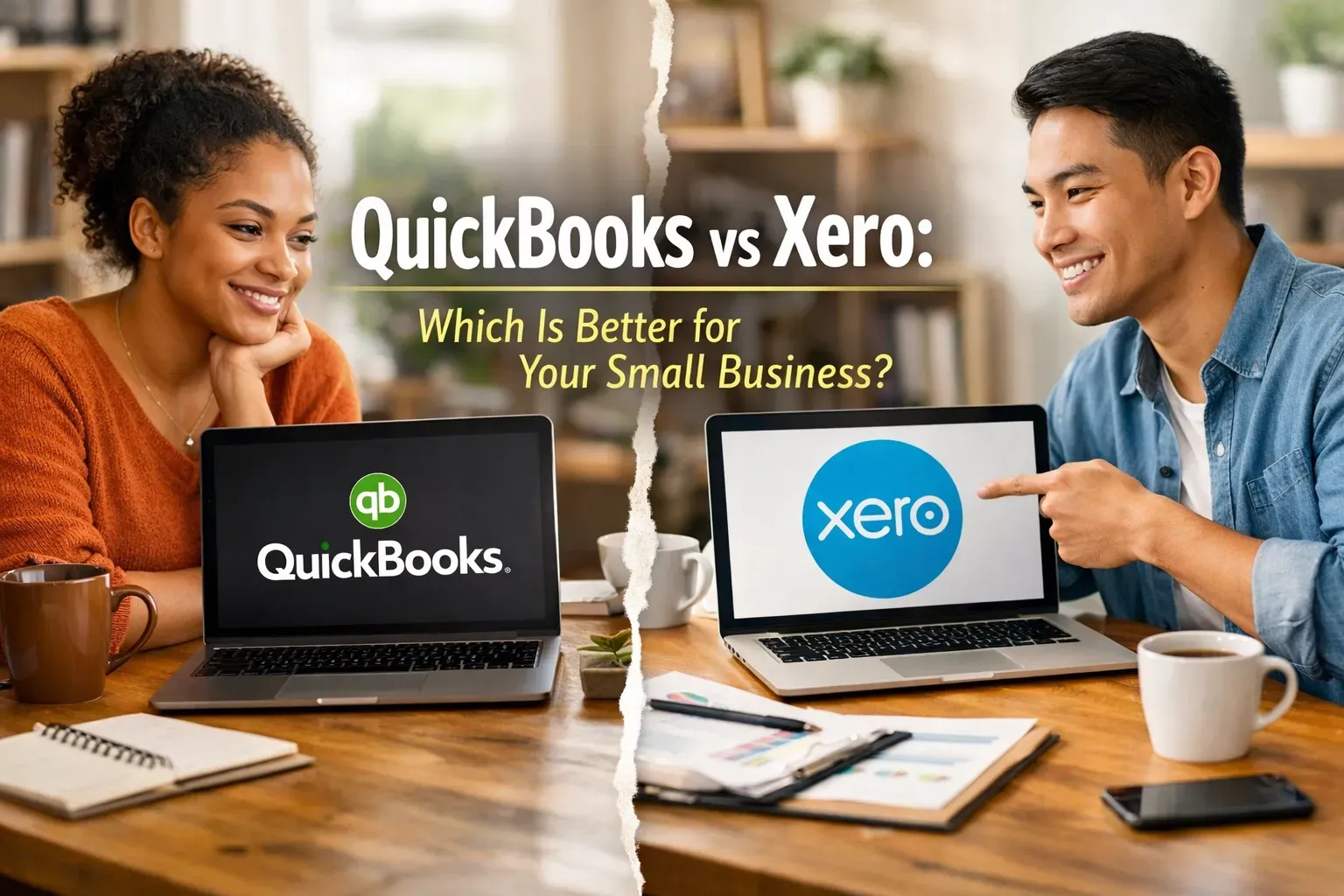
Choosing the right accounting software for your small business can feel a lot like trying to pick a favorite child, or, more accurately, like trying to pick between a Swiss Army knife and a high-end power tool. You know you need one to survive, but the sheer number of features, pricing tiers, and "expert" opinions can make your head spin. If you’ve been searching for a way to streamline your finances, you’ve likely narrowed it down to the two big titans: QuickBooks Online and Xero . Both are incredible cloud-based platforms that can transform your messy shoebox of receipts into a streamlined financial engine. But which one is actually right for your specific workflow? At DornerLand Bookkeeping, I see business owners in Buffalo, Rochester, and beyond struggle with this choice every day. Whether you’re just starting out or you’re looking to scale, the platform you choose will be the backbone of your financial health. Let’s break down the pros, the cons, and the "oh-no-how-do-I-fix-this" moments for both, so you can stop stressing and get back to running your business. The "Big Picture" Comparison Before we dive into the weeds, it’s important to understand that neither of these programs is "bad." In fact, they are the industry leaders for a reason. They both offer automatic bank feeds, cloud access so you can check your numbers from your phone, and the ability to invite your virtual bookkeeper to collaborate in real-time. However, they have very different "personalities." QuickBooks is the established veteran, it’s deep, robust, and preferred by the vast majority of accountants in the US. Xero is the sleek, modern challenger, it’s intuitive, emphasizes a clean user interface, and offers a unique "unlimited users" model that many growing teams love. QuickBooks Online: The 800-Pound Gorilla QuickBooks is essentially the industry standard. If you walk into almost any accounting firm in Orchard Park or Amherst, they’re going to ask for your QuickBooks login. The Pros of QuickBooks Reporting Depth: If you love data, QuickBooks is your best friend. It offers a massive array of pre-built reports. From detailed Profit & Loss statements to specialized sales tax tracking, the level of customization is hard to beat. Built-in Ecosystem: Everything is under one roof. QuickBooks has its own integrated payroll, time tracking (via TSheets/QuickBooks Time), and even merchant services for accepting payments. Accountant Familiarity: Because it’s so popular, finding someone to help you with QuickBooks training is easy. Most tax professionals are built to work within the QuickBooks ecosystem, which can save you a lot of back-and-forth during tax season. Advanced Inventory: For businesses that sell physical products and need to track multiple warehouses or serial numbers, QuickBooks’ higher-tier plans are generally more robust than Xero’s native offerings. The Cons of QuickBooks The Learning Curve: Because it does everything , the interface can feel a bit cluttered. It’s easy to get lost in the menus if you don’t know exactly where you’re going. User Limits: QuickBooks limits the number of users based on your plan. If you have a larger team that needs access to bill pay or invoicing, you might find yourself forced into a more expensive monthly subscription. Xero: The Modern, User-Friendly Alternative Xero entered the market with a mission to make accounting "beautiful." While "beautiful" isn't usually the first word people use for bookkeeping, Xero actually comes close. Its dashboard is clean, and its logic is often more intuitive for people who aren't trained accountants. The Pros of Xero Unlimited Users: This is a huge selling point. Regardless of which plan you’re on, you can add as many users as you want. This is perfect for businesses that want their sales team, office manager, and owner all to have varying levels of access without paying extra. Clean Interface: The dashboard gives you a high-level view of your bank balances, outstanding invoices, and upcoming bills without looking like a spreadsheet exploded on your screen. App Integrations: Xero has a massive "App Store" with over 1,000 integrations. If you use a specific CRM, inventory tool, or project management software, there’s a good chance it syncs perfectly with Xero. Global Mindset: If your business handles a lot of multi-currency transactions, Xero’s handling of foreign exchange rates is often cited as being smoother and more automated than QuickBooks. The Cons of Xero Reporting Limits: While Xero has great reports, they aren't quite as customizable as QuickBooks. If you need hyper-specific, granular data, you might find it a little restrictive. Less Common in the US: While it’s growing fast, some local tax preparers might not be as familiar with it. This is where having a virtual bookkeeper who specializes in Xero training (yes, we do both!) becomes a lifesaver. How to Choose Based on Your Workflow Still on the fence? Let's look at a few common scenarios. Scenario A: You’re a Solo Service Provider If you’re a consultant or freelancer in Niagara Falls and just need to send invoices and track expenses, both will work. However, Xero’s lower-tier plans are often more affordable if you have a low volume of transactions. If you plan on growing quickly and want the most "standard" setup possible, QuickBooks is a safe bet. Scenario B: You Have a Growing Team If you need five different people to log in and perform different tasks (one person for accounts payable , another for invoicing, and another for payroll entry ), Xero’s "unlimited users" model will save you a significant amount of money every month. Scenario C: You Need Robust Financial Reports If you are someone who checks their financial reports every single morning and wants to slice and dice data by location, class, or project, QuickBooks is likely the winner. Its reporting engine is designed for deep dives. Why Setup Matters More Than the Software Here is the secret that most software companies won't tell you: The software is only as good as the person setting it up. I’ve seen business owners choose QuickBooks because "everyone uses it," only to end up with a chart of accounts that looks like a disaster zone. I’ve seen people choose Xero for its beauty, only to realize they haven't reconciled their bank feeds in six months. Whether you choose QuickBooks or Xero, the "Problem-Solution" usually looks like this: Problem: You spend 10 hours a month struggling with financial data entry and still aren't sure if your numbers are right. Solution: Professional setup and training. At DornerLand Bookkeeping, we don't just hand you a login and wish you luck. We offer expert QuickBooks training and Xero setup to ensure your bank feeds are mapped correctly, your invoices look professional, and you actually know how to read your Profit & Loss statement. Recap: QuickBooks vs. Xero at a Glance QuickBooks Online: Best for: Deep reporting, US-based accountant preference, and businesses needing all-in-one payroll/inventory. Saving Time: Excellent automation for recurring invoices and bill reminders. Cost Factor: Can get pricey as you add users or advanced features. Xero: Best for: Unlimited users, modern interface, and businesses using many third-party apps. Improving Efficiency: Intuitive bank reconciliation that feels more like a game than a chore. Cost Factor: Great value for teams; multi-currency is handled exceptionally well. Stop Guessing and Start Growing Choosing between these two doesn't have to be a permanent "marriage." However, moving your data later can be a headache, so it’s worth taking the time to choose the one that fits your workflow today and where you want to be in three years. If you’re feeling overwhelmed, don't sweat it! You don't have to make this decision alone. Whether you’re looking for a virtual bookkeeper to take it all off your plate or you just need some one-on-one training to get your DIY books back on track, I'm here to help. We serve clients locally in Clarence, Buffalo, and Orchard Park, as well as virtually across the country. Let’s get your books cleaned up and your software working for you, not against you. Ready to find the perfect fit for your business? Contact us today for a consultation. We’ll look at your current workflow and help you decide whether QuickBooks or Xero will give you the peace of mind you deserve. Let’s make your bookkeeping the easiest part of your business day!
Family laughing together in a living room, with text about outsourcing bookkeeping and family time.
February 27, 2026
You didn’t start your business to spend your Saturday afternoons hunched over a laptop, squinting at receipt scans and wrestling with bank reconciliations. You started it to build a legacy, provide for your family, and enjoy the freedom that comes with being your own boss. Yet, for many small business owners in the Buffalo, Orchard Park, and Rochester areas, that freedom is often the first thing to go. As your business grows, so does the mountain of administrative tasks. Before you know it, the "quick check" of your books turns into a four-hour ordeal that eats into dinner time, bedtime stories, and weekend outings. If you feel like your business is slowly stealing your personal life, you aren't alone: but there is a way to take it back.  When you choose to outsource bookkeeping , you aren’t just hiring a service; you are buying back your time. At DornerLand Bookkeeping, we’ve spent over 10 years helping business owners across Western New York transition from "overwhelmed" to "organized." Here is how a professional virtual bookkeeper can change the way you manage your family time and your peace of mind.
By Jackie Dorner February 26, 2026
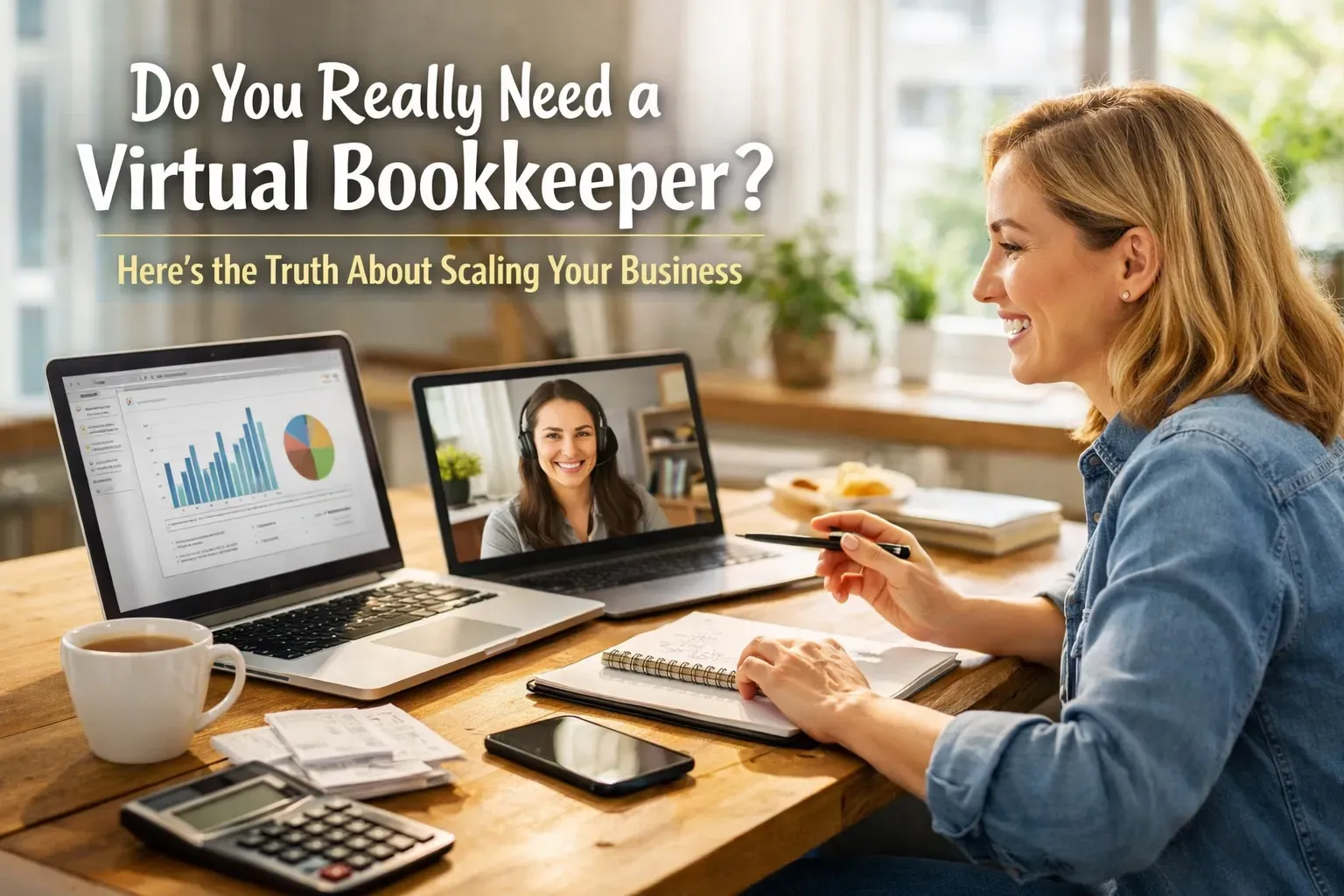
You started your business because you have a passion for what you do, not because you have a passion for reconciling bank statements at 11:00 PM on a Tuesday. In the early days, managing your own books might have felt like a rite of passage. It was a way to save a few dollars and stay close to every penny moving through your accounts. But as your business begins to scale, that "do-it-yourself" mentality starts to shift from a money-saver to a growth-killer. You find yourself spending more time in spreadsheets than in front of customers. You worry if your categorizations are correct or if you’re missing out on vital tax deductions. The question eventually arises: Do you really need a virtual bookkeeper? The short answer is that if you want to scale without burning out, the answer is almost certainly yes. But let’s look at the truth behind how a professional virtual bookkeeper changes the trajectory of your business. The Scaling Paradox: Growth Creates Complexity There is a common paradox in small business: the more successful you are, the less time you have to manage the very thing that measures your success: your finances. When you scale, your transaction volume increases. You might add new employees, which brings payroll complexities. You might expand your service area from Buffalo to Rochester or Amherst . Each of these steps adds layers of data that must be captured accurately. If you are still handling your own small business bookkeeping , these extra layers become a bottleneck. You aren’t just "doing the books"; you are performing a high-level administrative task that steals hours from your CEO-level responsibilities. What Exactly is a Virtual Bookkeeper? Before we dive into the benefits, let’s clarify what a virtual bookkeeper actually does. Unlike a traditional in-house employee who needs a desk, a computer, and a benefits package, a virtual bookkeeper works remotely using cloud-based technology. At DornerLand Bookkeeping , we leverage tools like QuickBooks and Xero to provide real-time updates to your financial records. Whether you are located in Clarence or Orchard Park , a virtual partnership means you have an expert in your corner without the overhead of a physical staff member. 1. Reclaiming Your Greatest Asset: Time The most immediate benefit of hiring a virtual bookkeeper is the gift of time. Think about how many hours a month you spend on financial data entry , chasing down receipts, and trying to make sense of your profit and loss statement. Now, imagine if those hours were spent on: * Developing a new product line. * Improving your sales funnel. * Training your team to provide better customer service. * Spending time with your family. When you outsource your bookkeeping services , you aren't just paying for data entry; you are buying back your freedom to focus on the "big picture" growth strategies that only you can execute. 2. Professional Expertise Without the Full-Time Salary Hiring a full-time, in-house bookkeeper is expensive. Between salary, taxes, insurance, and office space, the costs can be prohibitive for a growing small business. A virtual bookkeeper offers a "goldilocks" solution: you get high-level professional expertise for a fraction of the cost of a full-time hire. You only pay for the services you need. With over 10 years of experience , the team at DornerLand Bookkeeping understands the nuances of different industries. We don't just "plug in numbers"; we ensure your books are audit-ready and compliant with current regulations. This level of financial reporting gives you the confidence to make bold moves in your business. 3. Real-Time Data for Fast Decision Making In a scaling business, you cannot afford to wait until the end of the year: or even the end of the quarter: to know if you are profitable. You need to know now . A virtual bookkeeper keeps your accounts updated frequently. This means when an opportunity arises to invest in new equipment or hire a new team member, you don't have to "guess" if the cash flow is there. You can pull up your financial reports and see the truth immediately. This real-time visibility allows you to be proactive rather than reactive. You can spot a dip in margins or an increase in overhead before it becomes a crisis. 4. Scalability and Custom Solutions Your business is unique, and your bookkeeping should be too. One of the primary advantages of working with a virtual partner is the ability to scale services up or down based on your needs. Perhaps right now you only need basic reconciliation. But as you grow, you might need help with accounts payable to manage vendor relationships, or payroll entry to handle a growing team. At DornerLand Bookkeeping, we pride ourselves on offering custom solutions . We don't believe in a one-size-fits-all approach. Whether you need a simple clean-up or ongoing monthly support, we tailor our services to fit your current stage of growth. 5. Avoiding the "Growth Traps" Many business owners fall into the trap of thinking they can handle the books until they hit a certain revenue milestone. Unfortunately, by the time they reach that milestone, the books are often a mess. Inaccurate records lead to: Missed tax deadlines and penalties. Overpaying on taxes because you missed valid deductions. Cash flow shortages because you didn't see an upcoming expense. Difficulty securing loans because your financial statements aren't professional. A virtual bookkeeper acts as a safeguard against these growth traps. We ensure that your foundation is solid so that as the building grows taller, it doesn't crumble. Is It Time to Make the Switch? If you are nodding your head while reading this, it’s likely that you’ve reached the point where a virtual bookkeeper is no longer a luxury: it’s a necessity. Ask yourself these three questions: 1. Is my bookkeeping taking time away from revenue-generating activities? 2. Am I 100% confident that my financial records are accurate and up-to-date? 3. Do I have the data I need to make informed decisions about my business’s future? If the answer to any of these makes you feel uneasy, it’s time to look at professional bookkeeping services . Recap: The Benefits of a Virtual Bookkeeper To summarize, here is why a virtual bookkeeper is the secret weapon for scaling your business: Cost Efficiency: Save up to 50% compared to a full-time hire. Time Savings: Reclaim 5–20 hours a month to focus on sales and strategy. Expert Oversight: Benefit from 10+ years of professional experience and specialized knowledge. Clean Data: Maintain audit-ready books and clear financial reports year-round. Scalability: Services that grow with you, from payroll entry to accounts payable . Geographic Flexibility: Whether you are in Niagara Falls or working globally, your data is always accessible. Your Path to a Stress-Free Financial Future Scaling a business is hard work, but your bookkeeping shouldn’t be the thing that holds you back. By partnering with a virtual bookkeeper, you are choosing to invest in the longevity and health of your company. At DornerLand Bookkeeping , we are more than just an "outsourced service." We are your partners in growth. We take the stress of the numbers off your plate so you can get back to the work you love. Ready to see how custom bookkeeping solutions can change the way you run your business? We would love to chat with you about your goals and how we can support your journey. Contact DornerLand Bookkeeping today for a consultation and take the first step toward a more organized, profitable business.
A person using a telephone, representing outsourced accounts payable services in Buffalo, NY for eff
November 1, 2024
Discover how outsourcing accounts payable services in Buffalo, NY can help your small business reduce costs and improve financial management. Contact us today to learn more.